Silver Beakers & Tumblers
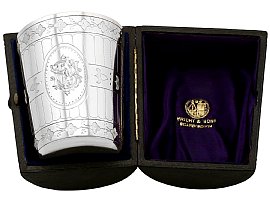
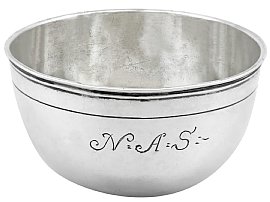
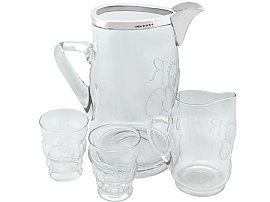
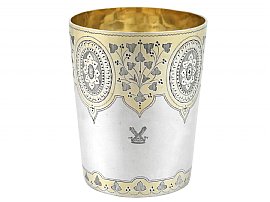
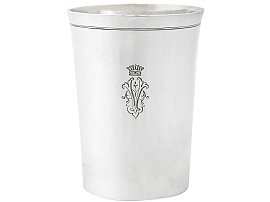
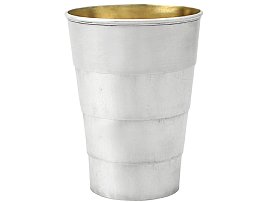
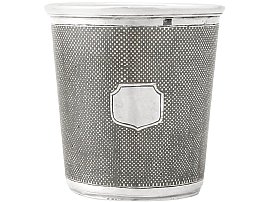
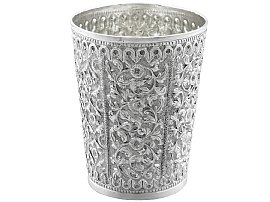
Browse our large collection of beakers and tumblers. Our selection features antique silverware from the Georgian, Edwardian and Victorian eras


_83_general.jpg)
Load more
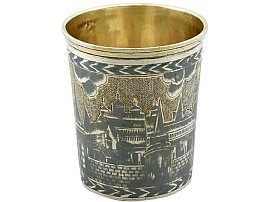
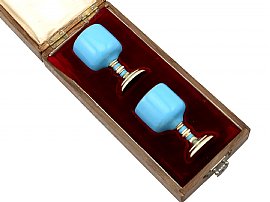
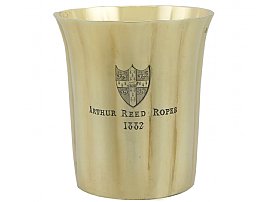
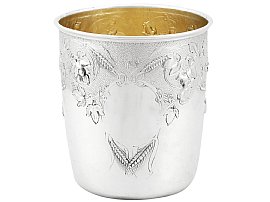
AC Silver offers an exceptional variety of vintage and antique silver beakers, ranging from collapsible beakers designed for travel to exquisite enamel Russian silver beakers and sterling silver tumblers. Our impressive collection of beakers and tumblers spans many historical periods, including the Georgian, Edwardian, and Victorian eras, as well as more modern vintage and contemporary times.
All the antique tumblers and beakers at AC Silver come with the added benefit of free and insured worldwide shipping, providing peace of mind for our customers. Additionally, we offer a 14-day return policy, ensuring that you are completely satisfied with your purchase.
Frequently Asked Questions
Beaker is the word traditionally used for a flat based vessel, rather than a bowl with a stem base such as a goblet, chalice or cup. Beakers also usually forgo handles or a lid, and have a basic cylindrical form.
The term beaker may be derived from the Greek 'bikos' (earthenware jug), German 'beker', or Old Norse 'bikarr'.
Beakers are very similar in shape and style to what is now commonly referred to as a tumbler, as they maintain the same cylindrical form, with the opening which is drunk from being slightly wider than the base.
A tumbler is a stem-less, often flat-bottomed drinking vessel, which is typically taller than 3 inches, and has no handle.
It would seem that the word 'tumbler' has been in circulation since the 17th Century. Initially, it was used to describe a metal cup with a round bottom. When the tumblers were placed on the table, they would 'tumble' around, due to the rounded bottom. It has been suggested that this was an intentional practice in order to sell more alcohol, as the drinker couldn't put the tumbler down until they had finished their drink. However, it is more likely that this intentional rounded base was instead crafted to aid with travelling. The rounded base of a tumbler meant that during a journey in a coach or (later) train, the cups would maintain their balance.
A beaker is traditionally a flat-based, cylindrical vessel without a handle or lid, distinct from stem-based goblets, chalices, or cups. The term "beaker" may originate from the Greek "bikos" (earthenware jug), German "beker," or Old Norse "bikarr." Beakers resemble what we now call tumblers, maintaining a similar cylindrical shape with a slightly wider opening at the top. They have been discovered across Europe from as early as the Copper Age (4300 BC - 3200 BC) and the Bronze Age (2500 – 600 BC), with their form remaining largely consistent through later periods. Silver beakers became prominent in the 16th century, when silver was valued for its durability and aesthetic appeal, making them a luxurious choice for drinking vessels.
By the 14th century, beakers were the most common drinking vessels in Europe, but their production declined in the 16th century with the advancement of glass manufacturing processes. Despite this, beakers continued to be favoured for travel during the Georgian, Victorian, and Edwardian eras due to their sturdy design compared to fragile stemmed goblets, which could be damaged during long journeys. Silver beakers, in particular, were appreciated for their elegance and practicality, maintaining their place as sought-after items for collectors.
A tumbler is a stem-less, often flat-bottomed drinking vessel, typically taller than 3 inches and without a handle. The term "tumbler" has been in use since the 17th century, originally describing a metal cup with a round bottom that would tumble when placed on a table. This design may have been intended to keep the cup balanced during travel in coaches or trains, rather than to encourage more drinking. Silver tumblers were popular in Britain and America during the 17th and 18th centuries, with notable figures like Samuel Pepys purchasing them.
Throughout the 17th and 18th centuries, flat-bottomed cups taller than typical tumblers were less common, but some bright cut engraved examples from the 1780s and 1790s, mainly crafted by the Bateman family, still exist. Victorian beakers, often used as presentation cups with inscriptions, are more common. Today, novelty cups and tumblers, such as collapsible beakers and those designed for children, are highly desirable collectibles.
A tumbler is a stem-less, often flat-bottomed drinking vessel, typically taller than 3 inches and without a handle. The term "tumbler" has been in use since the 17th century, originally describing a metal cup with a round bottom that would tumble when placed on a table. This design may have been intended to keep the cup balanced during travel in coaches or trains, rather than to encourage more drinking. Silver tumblers were popular in Britain and America during the 17th and 18th centuries, with notable figures like Samuel Pepys purchasing them.
Throughout the 17th and 18th centuries, flat-bottomed cups taller than typical tumblers were less common, but some bright cut engraved examples from the 1780s and 1790s, mainly crafted by the Bateman family, still exist. Victorian beakers, often used as presentation cups with inscriptions, are more common. Today, novelty cups and tumblers, such as collapsible beakers and those designed for children, are highly desirable collectibles.
Any more questions? Contact Us
Proud Members of