Silver Dishes
Browse our impressive collection of vintage and antique silver serving dishes for sale
_2302_general.jpg)

Load more
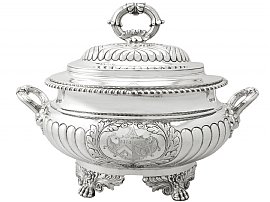
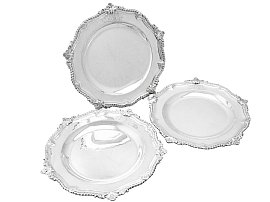
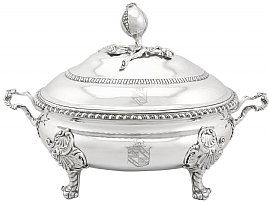
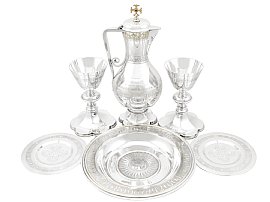
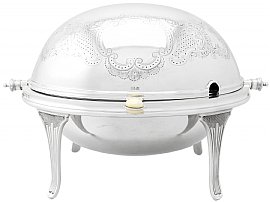
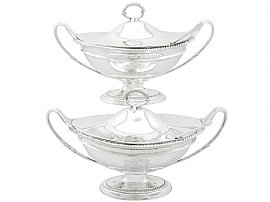
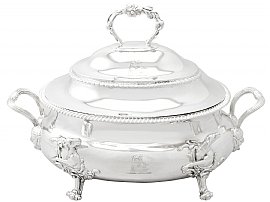
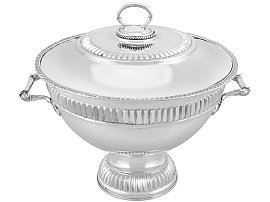
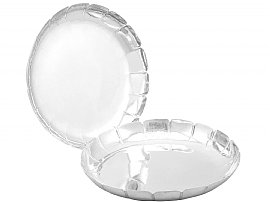
Here at AC Silver we have a large collection of antique and vintage silver dishes for sale.
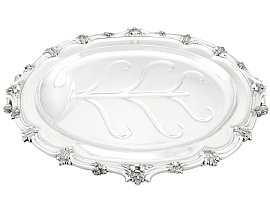
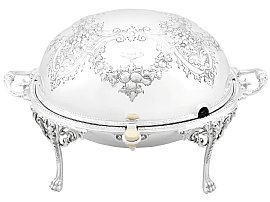
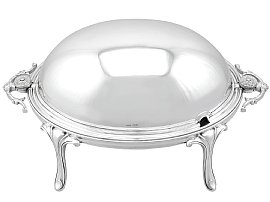
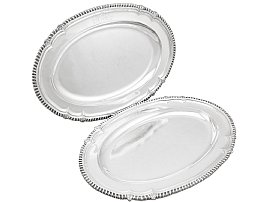
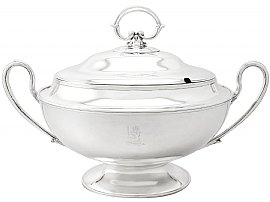
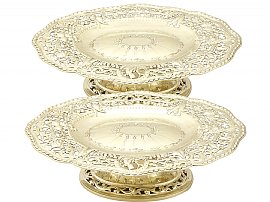
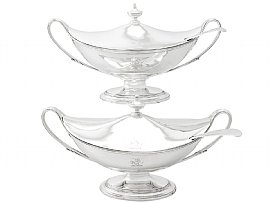
Our selection of antique silver dishes varies in size and type; from meat platters, tazzas and silver tureens, to centrepieces, epergnes and cake stands.
Whether you require an item for display or for use during formal occasions, our range of silver dishes includes pieces from across the Georgian, Victorian and Edwardian eras, as well as more recent twentieth century styles.
All of our sterling silver serving dishes have been kept in presentation condition and are of the highest quality of their type.
Frequently Asked Questions
Bon Bon Dish
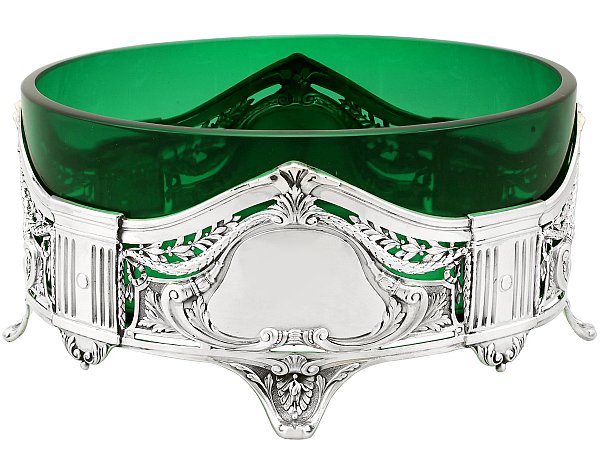
The bon bon dish was crafted initially to hold sweets such as an after-dinner mint. Typically these dishes or baskets are round or oval, with pierced decorated bodies to enable the colourful sweet wrapper to be displayed while in situ. The bon bon dish became popular in the Victorian era, with the majority being crafted in the 20th century; this style of dish is often confused with a Georgian sweetmeat dish.
Compote Dish
Compote is a fruit mixture combined with sugar syrup and flavoured with a wide range of spices. This enabled a wide variety of containers to be crafted in glass to allow the contents to be seen easily, in addition to porcelain and metal. A compote dish commonly has a pedestal style foot with a flatter style dish the upper portion; reflecting a more rounded form of a tazza.
Armada Dish
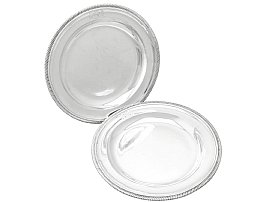
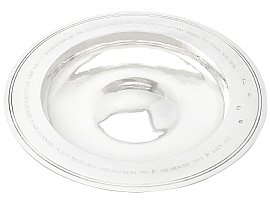
A classic armada dish is a shallow circular bowl with a flared rim and a convex portion to the centre of the well. The armada dish is a component of 'The Armada Service' which was crafted for Sir Christopher Harris as a set of dinner plates, created with the silver captured from the defeat of the Spanish Armada. Armada dishes come in a variety of sizes and whilst being used as plates they have also been used to keep food warm by using the smaller dishes as covers for larger examples, with the air of the wide rim.
Butter Dish
Antique butter dishes were crafted in crystal, silver and china. They were utilised before the existence of refrigerators and were provided with a cooling chamber to allow ice or water to keep the butter chilled. Here at AC Silver we have had some exceptional pairs of butter shells within our inventory, these dishes bear no lids and display a serving option for butter portions at the dining table.
Caviar Dish
Caviar is a gourmet food considered to be fit for the upper classes; being costly and rarely consumed. To enable the purity of the taste caviar is often served on sterling silver, as it is declared to enhance the flavour. Caviar dishes are often supplied with corresponding spoons, allowing the elimination of lower grade flatware interfering with the taste. Many caviar dishes will be embellished with aquatic and piscine themes, with the use of lids increasing in favour to aid the perishable food's longevity.
Tazza Dish
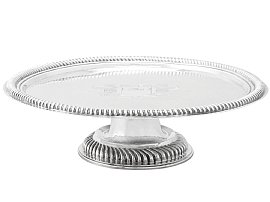
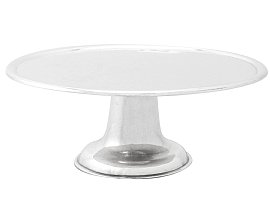
A tazza is commonly known as a wide shallow dish with a corresponding wide base. Through history the shape of the tazza has changed considerable, with Georgian examples being a plain plateau with a short-stemmed foot, to more Art Deco examples showing a dish to a taller pedestal. Unlike a compote dish, a tazza is often used for ornamental purposes, with glass components being decorative or eye-catching additions.
Bread Dish
A silver bread dish is classically oval in nature with pierced sides – coinciding with Neoclassical Revival preferences. The bread dish was not developed till the 19th century as an adaptation of cake baskets, with main difference of the removal of the carrying handle. The 20th century saw the development of the dish to have plain sides or an applied handle to either end; with turned ivory being a popular addition.
This style of dish is identified by its shallow nature and raised scalloped/fluted sides. This style of dish can also be called a dessert dish, however there are possibilities that they were utilised for salad. By the late 17th century salads were increasing in popularity and by the 1740s there were similar style vessels with feet being identified as 'sallad dishes'.
Entree Dish
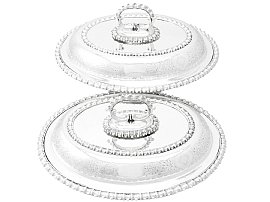
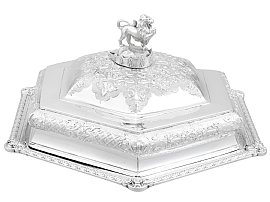
The entrée dish was brought to England from France and is used to serve food at the dining table. The covered dish bears a handle or handpiece style finial which can be used for easy removal, and allowing the dish to be utilised for both hot and cold foods. Whilst there are dishes available with stands and spirit burners as a heating element, the entrée dish classically has a simplistic elegance and decorative nature, to aid with ease of serving and aesthetically pleasing appearances on the sideboard during the meal.
Dish Ring
A dish ring, often called a potato ring or even an Irish potato ring, is a circular, spool-shaped stand upon which one can place hot dishes. The intention of the dish ring is both to keep the hot dish insulated, and also to prevent heat damage from occurring to a tabletop or sideboard. In the 1700s, when dish rings were invented, the dining table was often a highly polished wooden surface, and so an intermediary was needed between the table and the hot dishes.
Typically, a dish ring is between 3 ½ and 4 inches high, although there are both smaller and taller examples. This allows for serving dishes to take up the most efficient space on the table itself, rather than having every dish sitting at the same height. Some dish rings have the same width on the top and bottom; however, most of them have taper at one end, allowing them to be flipped and used to serve different sized dishes if it is needed.
A dish is an open, relatively shallow container which can be made from a multitude of materials such as glass, pottery, metal or wood. The style, appearance and cost of a silver dish, often matched the economic, social and political conditions of the time. The function of the dishes also varied across the periods, where the common factor of the silver dish was originally for holding food. This can be made clear by the name for certain dishes: bread dish, fruit dish, strawberry dish, bon bon dish, preserve dish, caviar dish, etc.
Any more questions? Contact Us
Proud Members of