Georgian Silverware (1714-1820)
Browse our magnificent collection of Georgian silverware, including Georgian flatware and Georgian house silverware
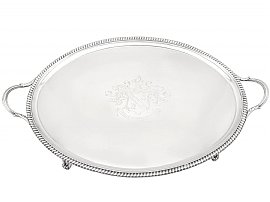
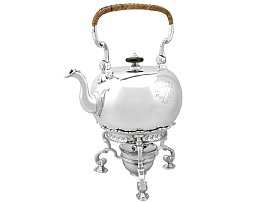
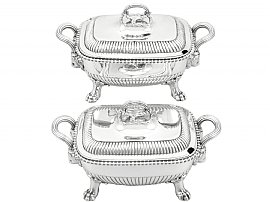
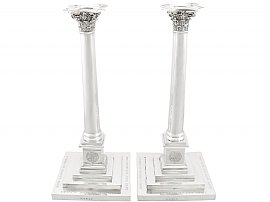
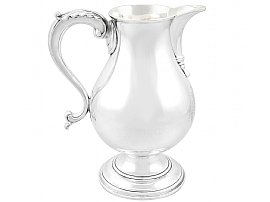
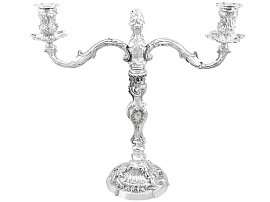
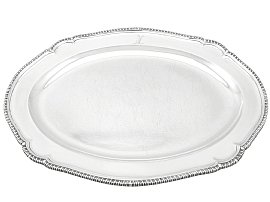
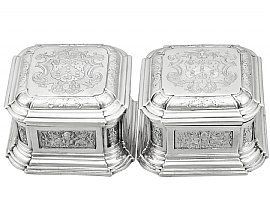
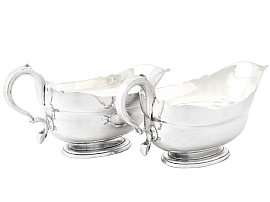
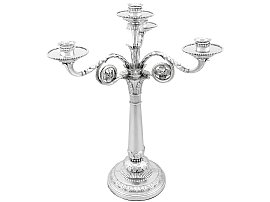
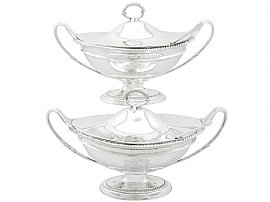
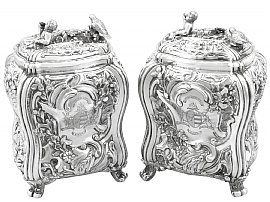
Load more
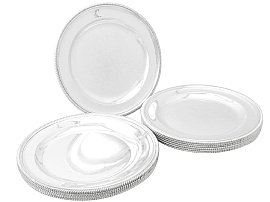
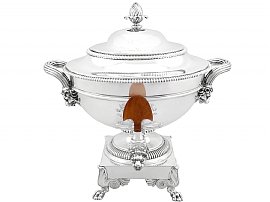
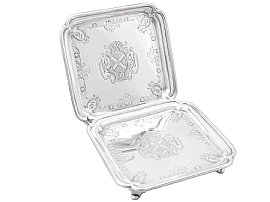
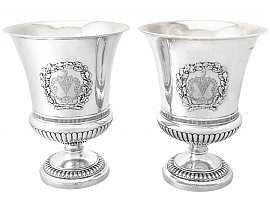
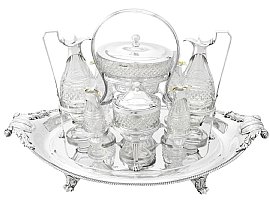
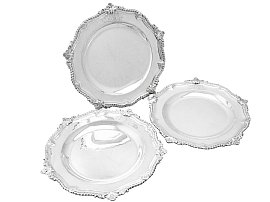
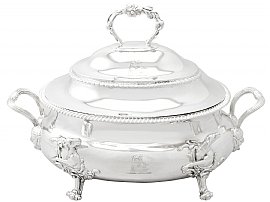
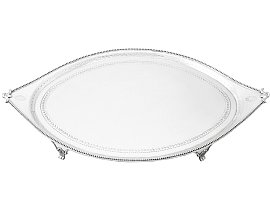
AC Silver is proud to present a magnificent collection of Georgian silverware for sale, including fine examples of Georgian silver flatware and Georgian Irish silver.
Andrew Campbell selects only the finest Georgian silver to add to the AC Silver inventory. All examples of Georgian silverware are presentation condition and ready for use.
All examples of Georgian silverware come with free and insured worldwide shipping and a 14 day return policy.
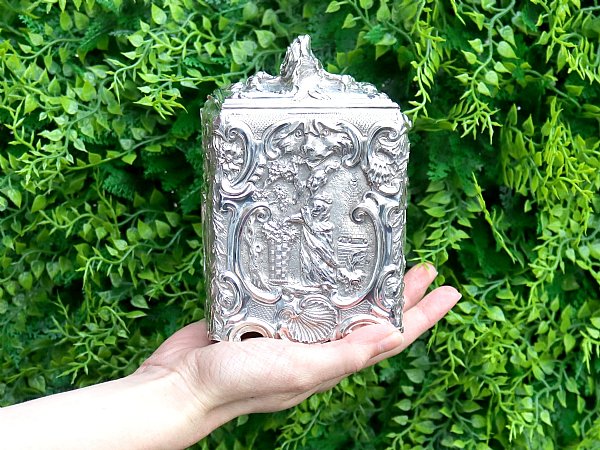
Collectors are drawn to Georgian silver not only for its aesthetic appeal but also for the diversity of styles and designs that emerged during this period. Whether adorned with intricate rococo detailing or showcasing the simplicity of neoclassical elegance, Georgian silver offers a broad range of options to suit varied tastes.
Frequently Asked Questions
With this topic there is always some conflict between those who collect silverware, all based on the declaration of the Georgian era. Here at AC Silver, we honour that the Georgian era spans across the Kings George I (1714-27), George II (1727-60) and George III (1760 – 1820). There are many who will extend this to include the reign of King George IV and William IV, till 1830.
Within this period there were many developments across the world, and notable changes in Britain. One of the main shifts was industrialisation and the wealth this created, which incorporated more production of silverware.
Georgian Styles
There are many different developments of silverware within the Georgian period, and this started with the minimal ornament of the George I style; this followed from the stylisation and influence of Queen Anne. However, there was a shift in the techniques used and the decoration developed – this is substantially due to French Huguenot refugee silversmiths coming to London; this includes renowned and collectable silversmiths such as Paul de Lamerie and Paul Crespin, amongst others. These silversmiths inspired a restrained variation of Rococo decoration which provided a flourish to this enhancement of artistic creation by the beginning of the reign of George II in the 1730’s.
By the early 1740’s to mid-1750’s the Rococo influence was prominent and there was further cast and applied ornamentation, in addition to profuse chased designs. Whilst this style choice enveloped the world of silverware there was also still a place for plain utilitarian items, with a vast number of mugs, tankards and sauceboats remaining rather minimal in decoration; by the Victorian period there was a desire and requests for silversmiths to ornament these articles with, at the time, modern scenes.
By the late 1750’s and early 1760’s (between the reign of George II and George III) there were two styles coming to the foreground. This included Chinoiserie style pieces and a rise in neoclassicism – taking designs from Greco-Roman world due to the popularity of The Grand Tour. These two styles competed for attention whilst Rococo designs were still common, and by the 1770’s these styles were often found in harmonious collaboration with each other.
The late 1770’s and early 1780’s found a new development in engraving, as steel tools were used creating bright cut engraved decoration. This became a wildly popular method to decorate plain silverware, creating a lighter style than the previous heaving chased periods. The engraving standards of the late eighteenth century was at its peak, with Georgian silverware bearing the highest quality hand engraving available. To enhance these designs there was sometimes an addition ¬the addition of a profuse bright cut engraved design to reflect the developments of the Georgian period; evident by the early 1800s when bold designs were replaced with delicate styles, with Royal Goldsmiths such as Paul Storr taking centre stage.
By the end of the reign of George III there was an influx once more of the Rococo designs and the next era of silverware saw this being combined with other decoration styles, creating diverse examples which were not distinct in a describable style.
Georgian silver refers to items of silverware that were produced during the reigns of three kings of England named George (George I to George III), spanning from 1714 to 1820. Georgian silver is often highly valued by collectors and enthusiasts due to its historical significance, craftsmanship, and the quality of the silver used.
The value of Georgian silver can vary based on several factors, including:
Age and Rarity: Older pieces from the early Georgian period may be rarer and more valuable than later pieces. Additionally, if a particular design or maker is rare, it can increase the value.
Maker's Mark: The mark of the silversmith or maker can significantly impact the value. Pieces made by well-known or highly regarded silversmiths are generally more valuable.
Condition: The condition of the Georgian silver piece is crucial. Pieces in excellent condition, with minimal wear, damage, or repairs, tend to be more valuable.
Design and Style: Elaborate and finely crafted designs may be more valuable than simpler pieces. Different styles were popular during various periods within the Georgian era, and collectors may have preferences for specific styles.
Provenance: The history or provenance of the piece can affect its value. If a Georgian silver item has a known and documented history, it may be more desirable to collectors.
Market Demand: The current demand for Georgian silver in the market also influences its value. Trends in collecting can impact prices, with certain styles or periods becoming more sought after.
Throughout centuries, hallmarks in Great Britain have served as a method for dating and assessing the quality of silver. Notably, this tradition of marking antique silverware evolved into a standardised means of certifying the purity of the material, affirming that all sterling pieces contained 92.5% silver. The English sterling silver may bear five distinct markings: a maker's mark, an assay office or town mark, a date mark, an assay mark, and a duty mark.
Learn more about silver hallmarks
During the Georgian era (1714-1837), several notable silversmiths and workshops produced exquisite silverware. Here are some major makers of Georgian silver:
Paul de Lamerie (1688-1751): Considered one of the finest English silversmiths of the 18th century, de Lamerie's work is highly sought after for its exceptional craftsmanship and intricate designs.
Hester Bateman (1708-1794): A prominent female silversmith, Hester Bateman ran a successful workshop known for producing high-quality silver items, particularly during the latter half of the 18th century.
Paul Storr (1771-1844): A leading silversmith of the early 19th century, Storr's work is characterized by its exceptional quality and often features ornate decoration. His pieces are highly collectible.
Matthew Boulton (1728-1809): As an industrialist and silversmith, Boulton co-founded the Soho Mint and collaborated with the renowned designer James Watt. His silver pieces are known for their innovation and quality.
Robert and Samuel Hennell: This father-and-son duo operated a prominent London silver workshop in the late 18th and early 19th centuries. Their work is recognized for its excellent craftsmanship and elegant designs.
John Wakelin and William Taylor: Partners in a London-based silversmithing firm, Wakelin and Taylor produced high-quality Georgian silver known for its artistic merit and craftsmanship.
Nathaniel Smith (active 1758-1782): Smith was a renowned English silversmith known for his exceptional work during the mid-18th century. His pieces often feature elaborate rococo designs.
Andrew Fogelberg and Stephen Gilbert: Operating in London during the late 18th century, this partnership created silverware with distinctive neoclassical designs that reflected the artistic trends of the time.
These makers and workshops played a significant role in shaping the landscape of Georgian silver, leaving behind a legacy of craftsmanship and design that continues to be highly valued by collectors and enthusiasts today.
Any more questions? Contact Us
Proud Members of