Antique Silverware
Browse our extensive collection of luxury antique and vintage silverware for sale
- Silver Baskets
- Beakers & Tumblers
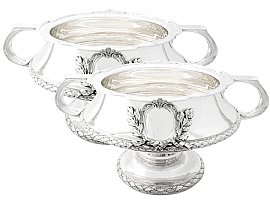
- Silver Bowls
- Boxes & Cases
- Claret Jugs
- Silver Candelabra & Candlesticks
- Silver Chalices
- Silver Coasters
- Silver Cups and Trophies
- Antique Decanters
- Silver Dishes
- Antique Silver Centrepieces
- Antique Silver Clocks
- Cruets & Condiments
- Silver Goblets
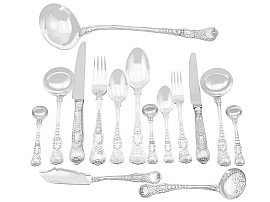
- Silver Flatware / Cutlery
- Silver Hip Flasks
- Inkstands & Inkwells
- Silver Stirrup Cups
- Silver Jugs
- Silver Letter Openers
- Antique Match Strikers
- Silver Mirrors
- Napkin Rings
- Silver Paperweights
- Silver Photograph Frames
- Porringers
- Silver Sauceboats
- Scent Bottles
- Silver Tankards & Mugs
- Silver Teaware
- Silver Toast Racks
- Silver Wine Coolers
- Silver Wine Decanter Labels
- Silver Trays, Plates & Salvers
- Silver Tureens
Browse these categories under "Antique Silverware"
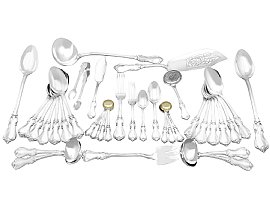
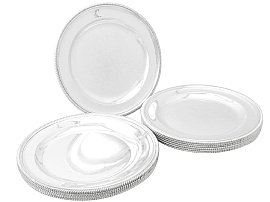
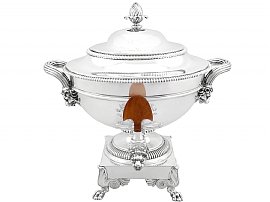
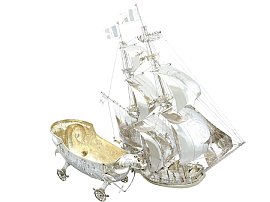
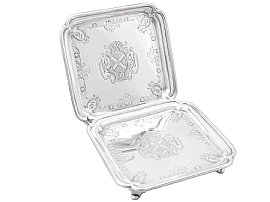
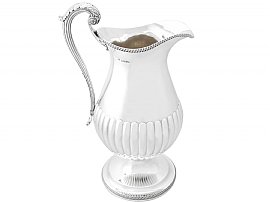
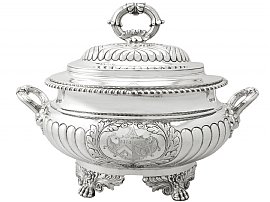
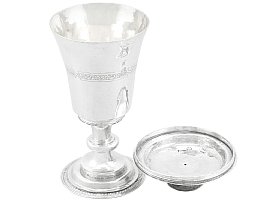
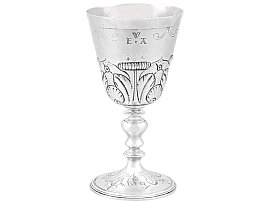
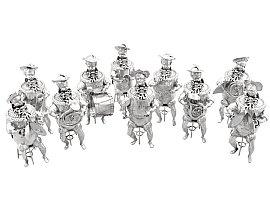
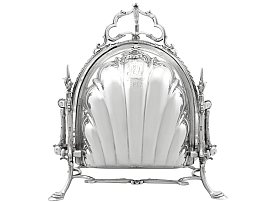
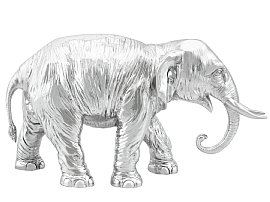

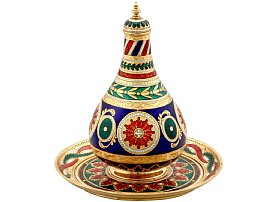
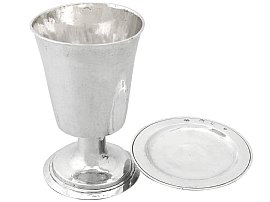
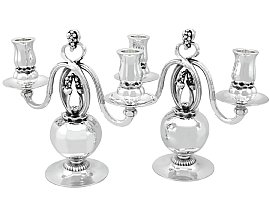
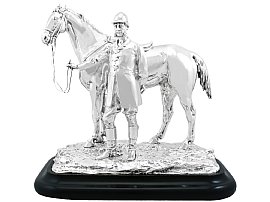
Load more
AC Silver is delighted to offer for sale an extensive range of antique silverware from across the world. Specialising in English, Scottish and Irish antique silverware we have a wonderful array of high quality pieces across the Georgian, Victorian and Edwardian eras through to vintage and contemporary times.
You can also search for antique solid silver by silversmith via our dedicated maker''''s area for fantastic silver pieces by collectable makers such as Paul Storr, Paul de Lamerie, Elkington & Co., William Bateman I, Tiffany & Co, and Cartier, as well as many more.
At AC Silver we carry a diverse range of items ranging from candelabra, Edwardian dinner sets, Queen Anne tea services, and canteens of cutlery - to many charmingly quaint antiquities such as Victorian vesta cases, asparagus tongs, grape shears and English silver tankards.
We are able to provide antique and vintage silverware to suit all tastes, whether to match with specific styles of décor and complement your home, or simply to satisfy your preference in style and design. For those who prefer the majesty and grandeur of Baroque, Regency, or Rococo style pieces or those who and prefer the subtlety, simplicity and minimalism of Art Nouveau and Art Deco style silverware.
We hope you enjoy browsing our vast inventory of antique and vintage silverware
Frequently Asked Questions
The key with cleaning your silver it to avoid overcleaning, Regular, 'gentle' dusting is preferable to infrequent, over-zealous cleaning! Importantly you must always use a clean cotton cloth or a feather duster.
If the item isn't tarnished, 'harring' with your breath and rubbing with a clean cloth should suffice to remove dust and minor marks such as light fingerprints.
Learn more about cleaning and caring for your silverware
When we speak of antique silver we are referring to a collectable silver object, created a long time ago, which has high value due to these facts. The definition of an ‘antique’ is an item that is a hundred years old or more. It is acceptable however, for the term ‘antique’ to be used for an item manufactured before 1940.
Millesimal Fineness
Millesimal fineness is the system denoting the purity of silver, gold and platinum alloys by parts per thousand of pure metal by mass in the alloy. e.g. the sterling silver standard has a minimum millesimal fineness of 925.
Millesimal Fineness Associated With Silver
999 - fine silver used in bullion bars
980 - common standard used in Mexico 1930 - 1949
958 - equivalent to Britannia silver*
950 - equivalent to French 1st Standard
925 - equivalent to Sterling silver
900 - equivalent to USA ''Coin silver''
875 - used in the former USSR
830 - used in older Scandinavian silver
800 - German standard silver after 1884; Egyptian silver
* Britannia standard silver was introduced by the British Government in 1697. However, this has only been denoted by the silver hallmark 958 since the hallmarking changes introduced in 1999.
The term 'sterling silver' emerged in England by the 13th century in reference to the quality or 'grade' of silver 925.
Fine silver such as 999 standard (99.9%) found in bullion bars is too soft to produce functional items.
In order to achieve strength, silver is alloyed to a specific degree with alternative metals:
Sterling silver - 925 - (copper)
Britannia silver - 958 - (copper)
Goloid - (copper, gold)
Electrum - (gold)
Argentium sterling silver - (copper, germanium)
Although there is some debate as to the origin of the term 'sterling', the general consensus is it stems from two most probable sources, both eminating from Europe:
1 - It is understood that a local German currency in the 12 century was used in commercial trading between Germany and England. The 92.5% silver coins, referred to as 'Easterling silver', were recognised as having a reliable quality and hardness. King Henry II adopted this standard for both English currency and weight - Easterling silver evolving into ''sterling'' silver, and a penny being literally one pennyweight of silver. Since in monetary terms there were twelve pennies to each shilling, and twenty shillings to one pound ''sterling'', then one pound sterling equated in mass to two hundred and forty pennyweights, which translated directly to one troy* pound of sterling silver in weight!
2 - The term may have derived from the Old French 'esterlin' in combination with the Old English 'stiere', meaning strong, firm, immovable.
*(Troy weight is a system of units of mass customarily used for precious metals such as silver. The troy pound is 5,760g while an avoirdupois pound is 7,000g)
Sterling silver is denoted by the appropriate hallmark, which in England is the lion passant an in Scotland, the lion rampant.
Any more questions? Contact Us
Proud Members of