Victorian Bracelets
Shop our magnificent selection of antique Victorian bracelets and bangles for sale; including ornate cuffs to delicate bracelets adorned with diamonds and gemstones
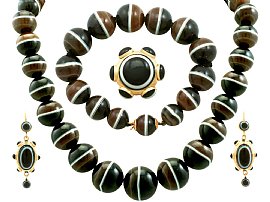
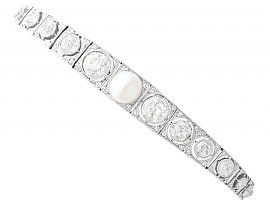
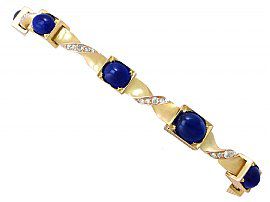

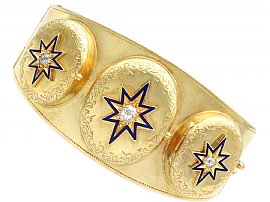


Load more
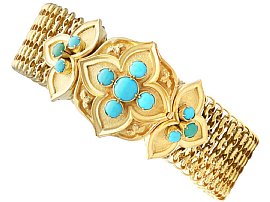
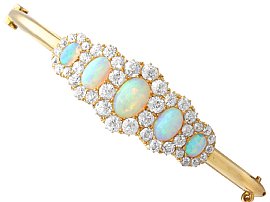
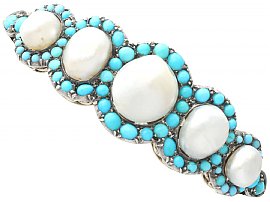
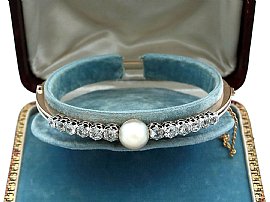
AC Silver are proud to present a stunning and impressive range of antique Victorian bracelets for sale, explore above and discover the perfect addition to your antique Victorian jewellery collection.
Our selection of Victorian bracelets includes items rich in historical significance with many ornamented with diamonds and other precious gemstones and crafted in precious metals such as yellow and white gold to platinum.
Andrew Campbell, using his 40+ years of experience within the antique industry, handpicks all Victorian bracelets for sale.
All antique Victorian bracelets for sale include free and fully insured global shipping.
Frequently Asked Questions
Queen Victoria was coronated during the Romantic period, and ancient symbols of eternal love, such as snakes, were seen in fashion throughout her reign.
During the Victorian period there are many cultural paintings displaying a wide range of dignitary wearing bracelets, including Queen Victoria herself with a multistranded pearl bracelet and Eleanor Pavlovna with a snake bangle worn on her forearm.
Due to the daytime fashion being so conservative and the ears never being exposed it was rare that earrings would be worn; especially with the notion of a pierced lobe being uncouth. To counterbalance this, it can be found that the Victorians wore brooches, hair ornaments and a numerous bracelet, in a range of gemstones, gold and enamel.
The middle of the Victorian period, referred to as the Grand Period saw a continuation in the use of bracelets, with gold being engraved, embellished with scrolling designs and incorporating twisting features, in addition to the prior used enamel and fringe work. The bracelets themselves became wider; many Victorian women would choose to wear one wider bracelet in replacement of their numerous finer examples.
After the death of Prince Albert there was a state of mourning, where black onyx gained popularity, in addition to cameos; a lighter way of expressing sentiment of a loved one. Cameos could be found in brooches but a number of bangles were produced so the wearer would visibly see the portrait more often through the course of the day.
In relation to signifying devotion and affection to loved ones, some bracelets and bangles would contain the popularised plaited hairwork, which was incorporated with gemstones and metal.
One of the most unusual bracelets of the Victorian period is one owned by Queen Victoria herself, which incorporated her children's baby teeth.
During the industrial revolution the use of factories and modern machinery developed and metalworking was performed on a mass scale; allowing a drop in the cost of jewellery, making it more accessible to the lower economic population. For the middle classes enamel hinged bracelets gained high popularity, with the variety of enamel colours replicating the details of gemstones, in addition to providing an alternative material to portray a decorative scene.
The late Victorian period saw a change in the daily attire, with larger skirts and wider sleeves, which in turn required the jewellery to becoming larger in scale.
Also, the late nineteenth century saw gold bracelets, which made an appearance and occasional functionality of handcuffs. The 1879 edition of Godey's Lady's Book reports; "A gold handcuff, presented by a gentleman, and locked on the wrist of the fair recipient, is a curious but not uncommon conceit in bracelets, and frequently is used instead of an engagement ring.". Whether these broad gold bracelets were presented with a lock or key, they were meant as a symbol for matrimonial bondage, however not restricted to be worn on the wrist of engaged women. The origin of this fashion is unknown, but was a bold statement to be worn by any Victorian lady.
A slide bracelet originates from the Victorian era, in which women would accessories chains with decorative slides. Over time, the slide bracelet emerged as a sought after bracelet style, so read on to find out a little more about this unique style!
During the Victorian era watch chains and pocket watches were a popular accessory and were often worn by women as long necklaces. Over time, women started to add decorative slides to the chains, which not only acted as embellishment but allowed women to shorten the chain, sometimes turning the chains into bracelets wrapped round the wrist.
Women began collecting the decorative slides over time as family heirlooms and jewellery box additions, fashioning them onto a bracelet until it was full, thus creating the slide bracelet.
Slide bracelets are amazing one-of-a-kind pieces, as every side can be different with various details and gemstones. Over time slide bracelets have been more established as bracelets
Victorian jewellery styles were revived in the 1940s and 1950s, with the slide bracelet style returning to popularity.
Any more questions? Contact Us
Proud Members of